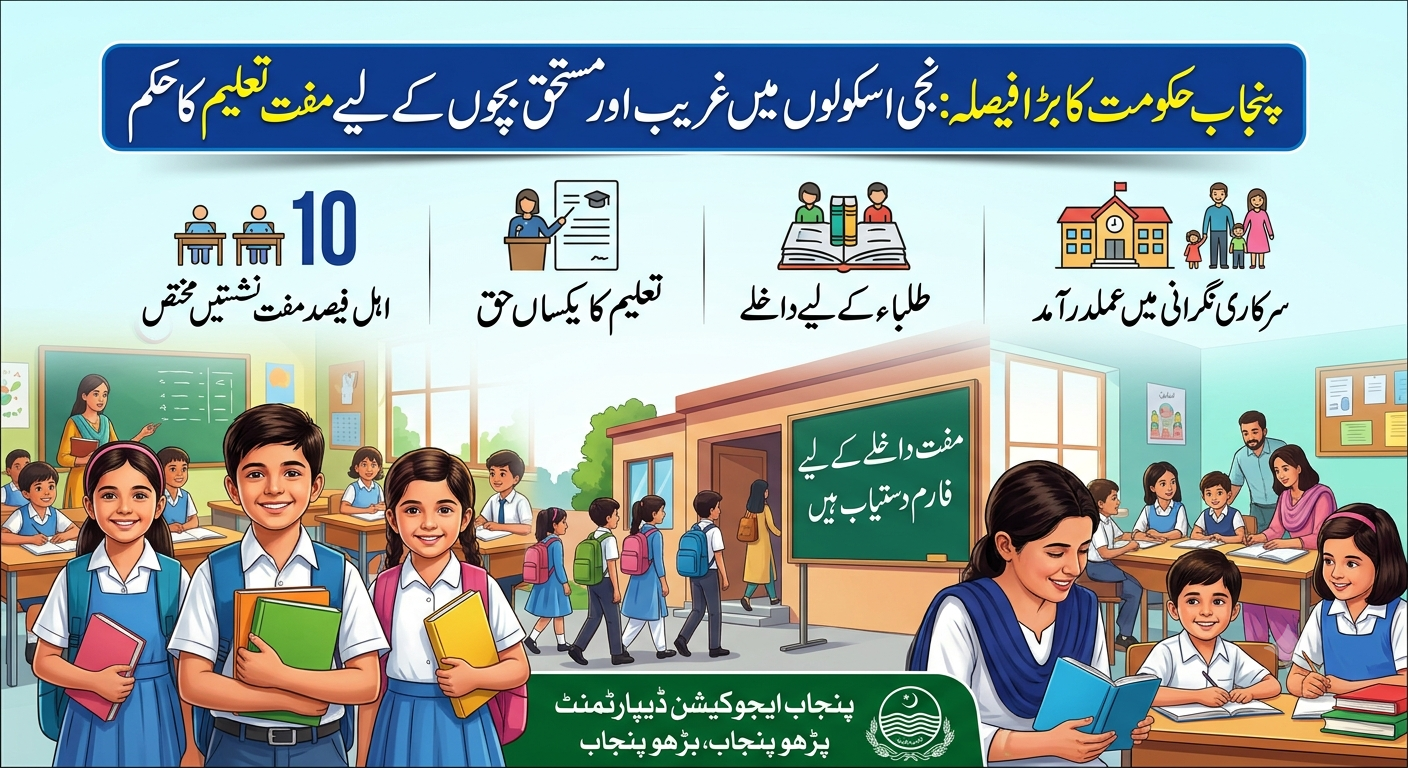
The Government of Punjab has reinforced strict regulatory directives requiring all private educational institutions across the province to provide free education to at least 10% of their total student body.
Enforced through the School Education Department (SED) and legislative monitoring under the framework of the Private Schools Regulation Ordinance, this mandate aims to bridge socio-economic divides, reduce school dropout rates, and ensure quality education for children from low-income households, orphans, and students with special needs.
Key Highlights of the Directive
- 10% Mandatory Reservation Quota: Every registered private school is legally required to enroll eligible underprivileged and deserving students free of charge.
- Priority Allocation Groups: Admissions under this quota prioritize orphans, children of deceased low-grade government employees, registered low-income beneficiaries, and children with physical or developmental disabilities.
- Strict Compliance & Monitoring: District Education Officers (DEOs) and provincial authorities have been tasked with auditing enrollment registers to verify implementation. Non-compliant institutions face regulatory penalties, including the cancellation of school registrations.
- Gender Equality: For co-educational institutions, the reservation maintains a balanced 50:50 distribution quota between male and female applicants.
Why the Order Was Issued
Despite progress in expanding literacy, millions of children in the region remain out of school due to escalating tuition fees, textbook costs, and family financial distress. While public sector schools continue expanding their footprint, private institutions account for a substantial share of quality infrastructure and academic resources.
By holding private educational institutions accountable to their statutory social obligations, the Punjab government seeks to:
- Reduce the Out-of-School Children Count: Reintegrate out-of-school youth into formal learning environments.
- Ensure Equal Educational Standards: Allow talented students from impoverished backgrounds to access modern classroom facilities, laboratories, and teaching methods.
- Establish Transparency: Standardize free seat reporting through automated Management Information Systems (MIS) to eliminate favoritism or ghost enrollments.
Implementation and Regulatory Framework
To guarantee smooth execution without compromising educational quality, the School Education Department is enforcing the following measures:
- Verification of Eligibility: Parents or guardians applying under the reserved quota must submit income verification certificates or recognized social safety net registrations.
- Transparent Reporting: School administrations are obligated to upload complete beneficiary data—including student details, grade levels, and fee waiver verifications—to departmental portals.
- District-Level Monitoring Committees: Local education officials conduct periodic surprise inspections to inspect classroom integration and handle parental grievances regarding rejected applications.
Conclusion
The Punjab government’s insistence on mandatory free seat quotas in private schools represents a crucial step toward educational equity. While private school associations have expressed concerns regarding operational expenses, education advocates emphasize that integrating 10% deserving students is a reasonable social contribution to the community. With strict administrative oversight, transparent data verification, and community participation, this initiative has the potential to dramatically alter the educational landscape and build a more inclusive society.
Frequently Asked Questions (FAQs)
1. What percentage of seats must private schools reserve for free education?
Private schools in Punjab are required to reserve at least 10% of their total student enrollment for free education aimed at deserving and underprivileged children.
2. Who is eligible for free admission under this quota?
Eligible applicants include:
- Children from low-income families meeting official income criteria.
- Orphans and children belonging to vulnerable households.
- Children of deceased lower-grade government employees.
- Students with physical or developmental disabilities.
3. Does “free education” cover all educational expenses?
The primary directive covers full tuition fee waivers. Depending on the specific district guidelines and school policies, auxiliary benefits such as basic learning materials or admission fees are also included under the free quota umbrella.
4. What happens if a private school fails to comply with the order?
Private schools that refuse to allocate the mandatory quota or misreport beneficiary numbers face severe regulatory action. Penalties include heavy fines, withdrawal of official recognition, or cancellation of school registration.
5. How can parents apply for free seats in private schools?
Parents or guardians can submit direct applications along with required income/identity verification documents to the designated private school or submit applications through the District Education Officer’s (DEO) submission windows during the official admission cycle.